
Ash Trees Dying Across the Poconos? What the Emerald Ash Borer Does
October 21, 2026
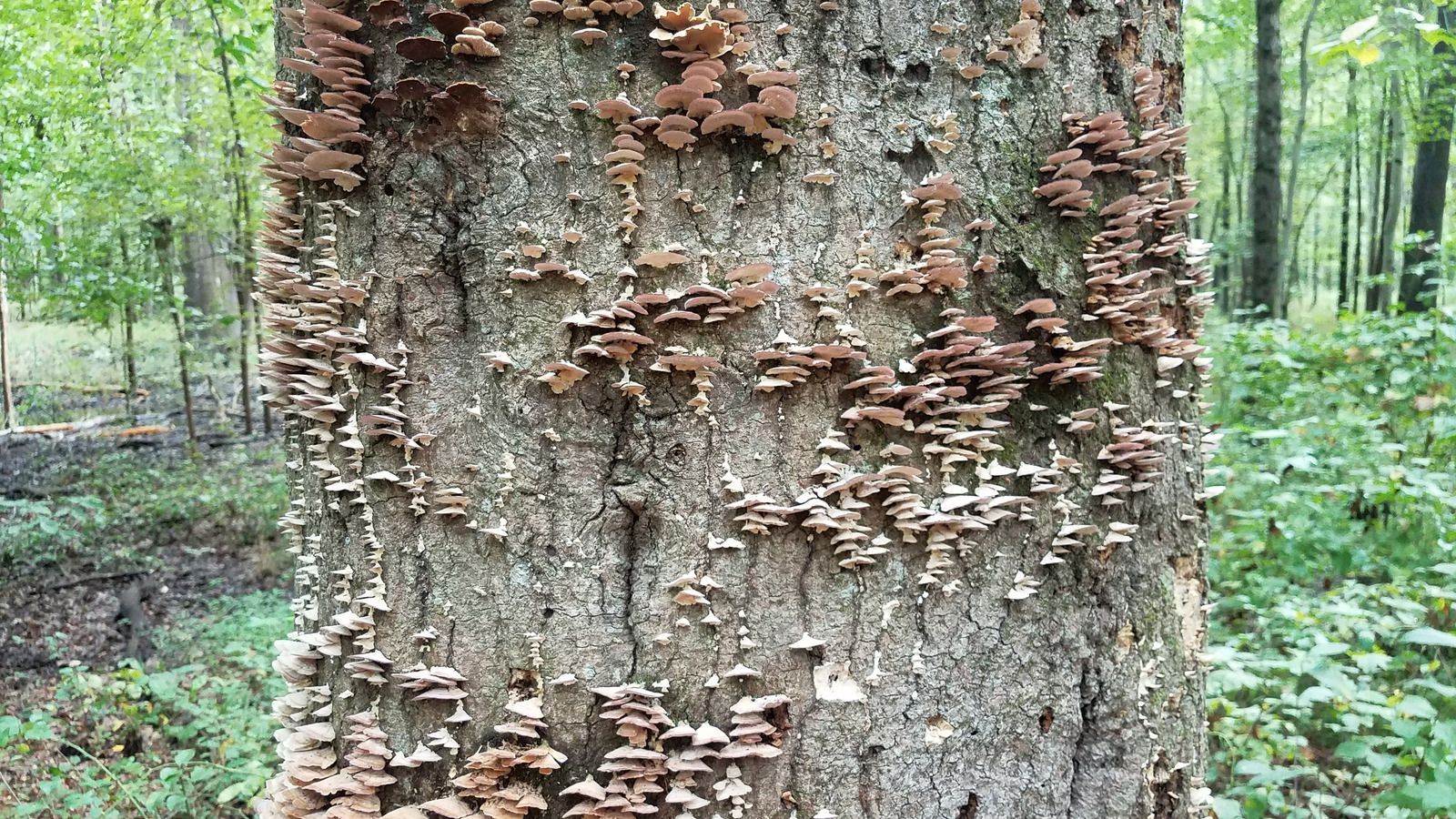
Decaying wood naturally attracts insects and other organisms.
Although grinding removes most visible wood material, underground roots eventually decompose. In some situations, this process may attract termites, beetles, ants, or fungi.
Pest Attraction Concerns
The likelihood of pest issues depends on:
- Tree species.
- Soil moisture levels.
- Climate conditions.
- Existing pest activity.
Professional assessment helps determine whether grinding presents any long-term concerns for a particular property.
Evaluating Local Conditions
Quick Answer: The emerald ash borer is a metallic green beetle whose larvae tunnel under the bark of ash trees and cut off the layer that carries water and nutrients up to the crown. A tree can look healthy for several years while this happens, then thin out, shed bark, and die quickly. Thinning at the top of the canopy, woodpecker damage, vertical bark splits, and small D shaped exit holes are the clearest signs. Once much of the canopy is gone, the wood turns brittle, so the tree becomes a falling hazard well before it looks fully dead. A professional health assessment tells you whether a tree can still be protected or needs to come down.
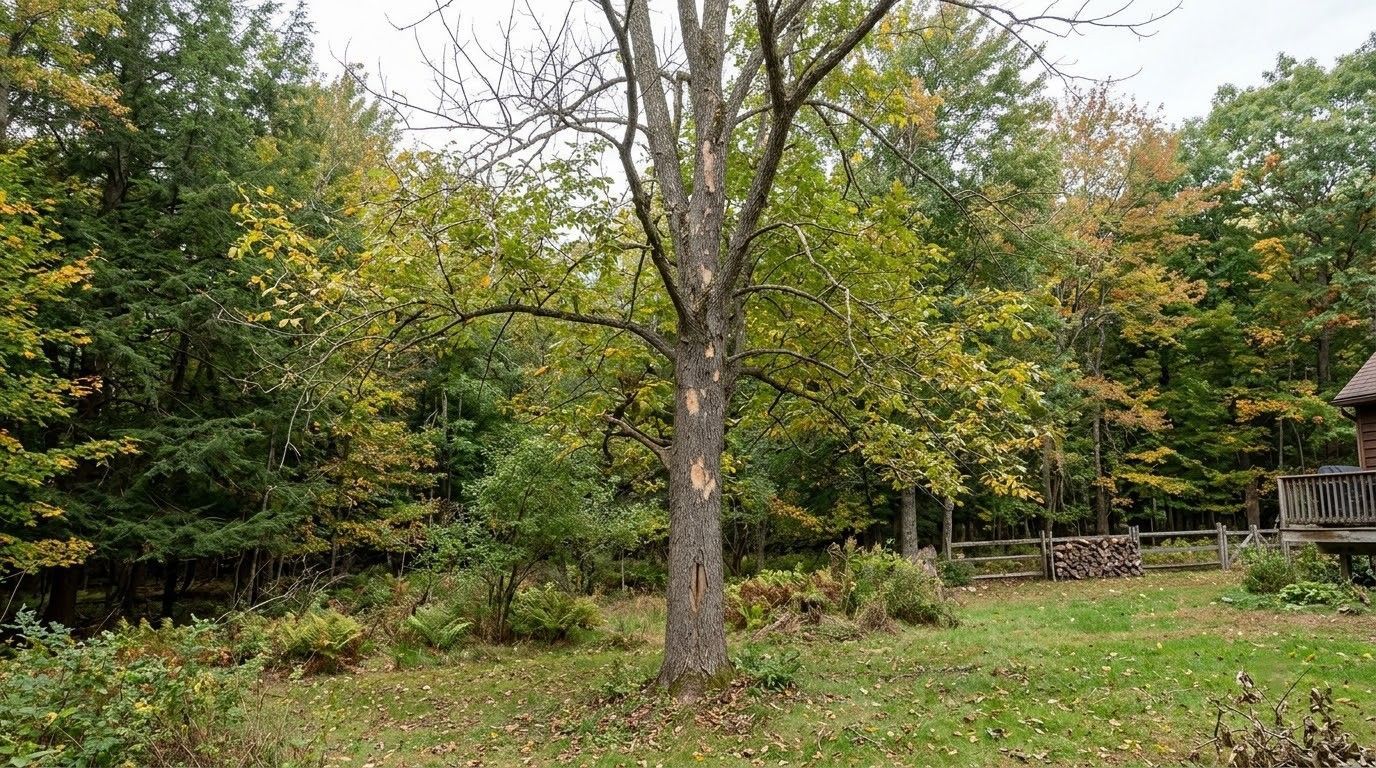
You are walking the back edge of your property in the Poconos and glance up at the big ash that has shaded the yard for as long as you have lived there. The top looks thinner than it did last summer. A few bare twigs poke out above the leaves, and there are pale patches on the trunk where the bark seems to have been scraped away. A neighbor down the road lost an ash last winter, and another one on the next lot is hanging on with half a crown. You wonder whether yours is next, and whether it is safe to let it stand over the driveway for one more season.
That uneasy feeling is worth listening to. Ash trees across eastern Pennsylvania have been under steady pressure from one small insect for years, and the damage is often well advanced inside the wood before anything looks wrong from the ground. Understanding what the beetle does, what it leaves behind, and how quickly a weakened ash becomes unreliable will help you decide what to do before a storm makes the decision for you.
What the Emerald Ash Borer Actually Does Inside the Tree
The adult beetle is only about a half inch long and spends a few weeks of the warm season feeding on leaves and laying eggs in bark crevices. The real harm comes from what hatches. Each larva chews its way under the bark and feeds on the thin layer of living tissue that moves water and sugars between the roots and the leaves. As the larvae tunnel, they leave winding, S shaped galleries packed with sawdust like material. One gallery is a nuisance. Dozens of them running side by side cut around the trunk like a belt, and the tree can no longer feed its own crown.
Because all of this happens beneath the bark, the tree gives very little notice early on. In the first few years of an infestation, an ash can leaf out normally and look fine from the street. Then the decline speeds up. Extension researchers describe an infested tree as often taking four to six years to die, but the final stretch can happen fast, with a tree going from mostly full to mostly bare in a single season or two.
This is also why ash trees are different from many other trees that struggle. A maple with a dead limb may have a local problem. An ash with the beetle has a problem in the system that keeps the entire tree alive, and no amount of watering, mulching, or feeding fixes a cut off supply line by itself.
Signs You Can Check From the Ground
You do not need a ladder to look for the most common clues. Take a slow walk around the tree in daylight, ideally when the leaves are out so you can compare it with nearby trees, and look for these patterns.
Thinning at the Top and Sides of the Crown
Early canopy loss typically begins in the upper branches and progresses downward. Sparse foliage across the top third, while lower branches remain full, is a common warning sign.
Woodpecker Activity
Woodpeckers search for larvae beneath the bark, stripping patches of the outer layer. These lighter, blotchy areas on the trunk may appear before noticeable canopy changes.
D-Shaped Exit Holes
Adult beetles leave small, approximately one-eighth-inch exit holes with one flat side, forming a distinctive D shape. This pattern strongly suggests emerald ash borer activity, unlike many native borers.
Vertical Bark Splits
As tissue beneath the bark dies, cracks may develop lengthwise along trunks and larger branches. Loose bark may reveal winding galleries created by feeding larvae underneath.
Sprouts at the Base or Along the Trunk
Stressed ash trees may produce clusters of thin shoots near the trunk base or along major branches. These sprouts indicate the tree is responding to foliage loss.
Tip: Take a few photos of the crown from the same spot each season, in full leaf. Comparing them year to year makes gradual thinning obvious, and it gives an arborist a useful record of how fast the tree is changing.
Why a Declining Ash Becomes Unpredictable
Wood that has been starved of moisture dries out and grows brittle. Internal cracks can form in the load bearing parts of the tree where you cannot see them, so a limb can let go at almost any point along its length, sometimes on a calm day with no wind at all. Research on dying ash has also shown that structural weakening can start while a good share of the canopy is still green, which means a tree does not need to be fully bare to be a risk.
On a wooded Pocono lot, a failing ash may drop into dense growth and cause little harm. Near a house, a driveway, a deck, a play area, or a utility line, the same tree is a different situation entirely. Trees in the hills around Stroudsburg and Mount Pocono also deal with wind exposure, heavy wet snow, and ice, and a brittle ash has far less ability to flex and recover than a sound one. A tree that might have come through a winter storm in good shape five years ago can shed major limbs in the same conditions today.
The longer a dead or dying ash stays up, the more brittle it gets, and the more dangerous it is to climb and cut. Experienced crews treat standing dead ash with extra caution because the wood can fail without warning during the cut itself. That is a job to leave to people with the training, rigging, and equipment to handle it.
Warning:
Do not climb, prune, or cut down a dying ash yourself. Brittle wood can snap in directions that a healthy tree never would, and a limb that looks solid may be hollow or cracked inside. Keep people, pets, and vehicles out of the fall zone until the tree has been assessed.
Can an Ash Tree Be Saved?
Sometimes, yes, but timing decides almost everything. Systemic treatments applied to the tree can protect an ash that still has most of its crown, because the active ingredient moves through the tree and reaches the larvae feeding under the bark. Guidance from university extension programs generally says that a tree with roughly 20 to 30 percent canopy loss or more is no longer a good candidate. By that point too much of the transport tissue has been destroyed for treatment to restore the tree.
Treatment is also a commitment rather than a single event. The beetle does not leave an area once it arrives, so a protected tree usually needs ongoing attention for the rest of its life. That makes sense for a large, healthy, well placed ash that adds shade, privacy, or value to a property. It makes much less sense for a tree that is already mostly bare, leaning, or growing in a spot where it threatens a structure.
For a tree past saving, the better plan is a controlled removal while the wood is still reasonably sound.
Removing an ash that is still partly alive is a calmer, more predictable job than taking down one that has been dead for two winters. Late fall through early spring, when the tree is dormant and the ground is firmer, is a good window for much of this work.
How the Decision Gets Made on Your Property
A professional assessment is built to answer a few specific questions. How much of the crown remains, and is the loss concentrated in the top or spread throughout? Are there exit holes, galleries, or bark splits confirming the beetle rather than some other stress? How firm is the wood, and are there cracks or decay at the base? What stands within reach if the tree or a large limb comes down?
A professional health assessment looks at the full tree, including bark quality, leaf structure, root condition, and growth trends, with an ISA certified arborist leading the evaluation. Diagnostic instruments can help judge the condition of the wood when a visual check is not enough, and resistance testing can show the density of the inside of the trunk. The goal is not to talk anyone into removal. Some ash trees still have good years ahead with the right protection, and some are better handled now than after the next storm.
If a tree has to come down, the plan also accounts for what happens afterward. Stump grinding clears the base, and planting a suitable replacement, a species that the beetle does not target, gets shade and structure back on the property. Many homeowners find that deciding on the replacement at the same time as the removal keeps the yard from sitting bare for years.
Frequently Asked Questions
How do I know whether my tree is an ash in the first place?
Ash leaves are compound, with leaflets along a central stem growing in opposite pairs, and branches grow in opposite pairs too. Mature bark forms tight diamond ridges. An arborist can confirm it in one visit.
Does thinning at the top always mean emerald ash borer?
No. Drought, root damage, soil compaction, and other pests can all thin a crown. That is why the exit holes, bark changes, and galleries matter. A proper assessment rules the other causes in or out.
How long does an infested ash take to die?
Often several years from the first infestation, though the last stages can move quickly. An ash can look acceptable one summer and be mostly bare the next, so waiting to see what happens is risky.
Is a dead ash tree really more dangerous than other dead trees?
It can be. Ash wood dries and grows brittle, and it can develop hidden cracks while the tree still looks partly alive. That makes limb failure less predictable and makes cutting the tree more demanding.
Can I just leave a dead ash standing in the back of my property?
Only if no person or valuable thing will ever be within reach of its fall, including the full trunk and largest limbs. Near a house, path, or driveway, deal with it before it fails.
Is there any way to protect a healthy ash before the beetle shows up?
Preventive treatment works best on a healthy tree, because all of its transport tissue is still intact. An assessment can tell you whether a particular tree is worth protecting and what the realistic outlook is.
Act While The Choice Is Still Yours
Most ash trees in this part of Pennsylvania are either already affected or standing in a neighborhood where the beetle is active. The trees that come through this safely belong to owners who noticed the early thinning, got an honest read on the wood, and acted while it was still sound. The ones that cause real trouble are usually the trees left to stand through another winter of ice and wet snow, growing more brittle and less predictable with each passing month.
Backwoods Tree Service
has spent 10
years reading
ash trees
across Stroudsburg, PA, where wind, heavy snow, and this one small beetle have thinned canopies lot by lot. Checking the crown, the exit holes, and the firmness of the trunk together is what separates a tree still worth protecting from one that should come down before a storm decides for you. Looking early keeps the most options open, and keeps a quiet backyard ash from becoming a hazard over the driveway.