
Mushrooms or Fungus Growing at the Base of Your Tree? What It Signals
September 28, 2026
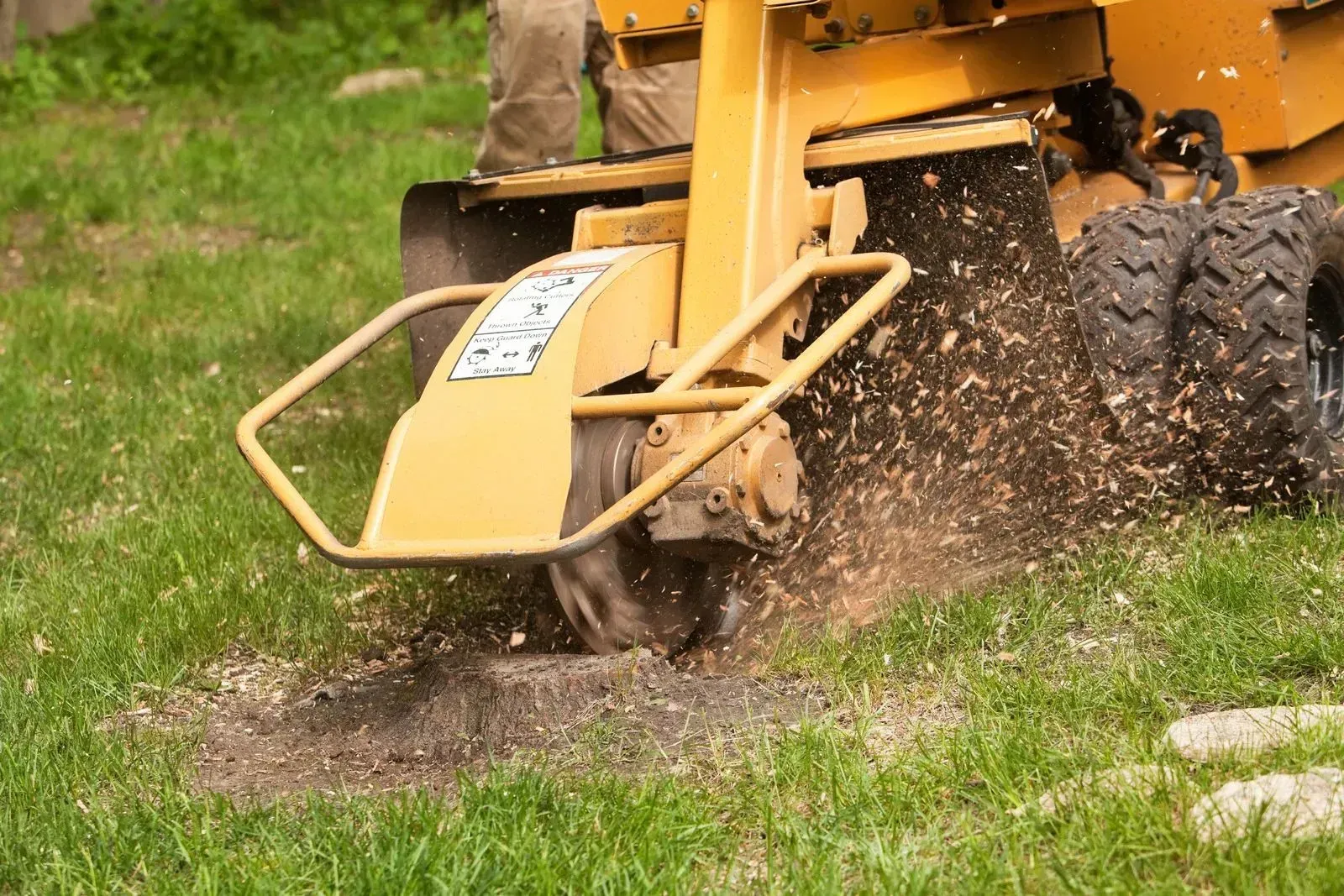
Decaying wood naturally attracts insects and other organisms.
Although grinding removes most visible wood material, underground roots eventually decompose. In some situations, this process may attract termites, beetles, ants, or fungi.
Pest Attraction Concerns
The likelihood of pest issues depends on:
- Tree species.
- Soil moisture levels.
- Climate conditions.
- Existing pest activity.
Professional assessment helps determine whether grinding presents any long-term concerns for a particular property.
Evaluating Local Conditions
Quick Answer: A cluster of mushrooms or a shelf-like growth at the base of a tree usually means a wood-decay fungus is already active inside the trunk or root system, not that one just showed up overnight. Soft, short-lived mushrooms in the surrounding mulch or lawn are often harmless and feeding on buried wood or old roots, but anything growing directly out of the bark, the root flare, or exposed roots is a different story. Honey-colored clusters, dark shoestring-like threads under the bark, or hard shelf conks stacked on top of each other all point to decay that's been building for years before it ever broke the surface. Once you see fungus growing from the tree itself rather than the ground around it, that tree needs a professional look at the roots and trunk before you decide whether it's a watch-and-wait situation or a hazard.
You're raking leaves around the base of the sugar maple in the side yard, the one that's been there longer than the house, and you notice a cluster of tan, honey-colored mushrooms pushing up right where the trunk meets the ground. They weren't there in the spring. Maybe you assume it's just something growing in the mulch, the way mushrooms pop up after a wet week. Maybe you pull a few and forget about it.
Here's what most homeowners don't realize: where a mushroom is growing matters more than the mushroom itself. A soft cap growing three feet away in the lawn, feeding on an old buried root or a bit of dead wood, is a different organism doing a different job than a mushroom or shelf fungus growing directly out of the trunk, the root flare, or an exposed root. The second kind is almost always feeding on the living tree, and by the time it's visible above ground, the decay underneath has usually been progressing for a while.
Why Fungus Shows Up at the Base of a Tree in the First Place
Trees don't get infected by decay fungi through healthy, intact bark. Fungal spores need an entry point — a pruning wound that wasn't sealed properly, bark damaged by a mower or string trimmer, a crack from storm stress, or roots cut during construction or a driveway project. Once spores land in that wound, the fungus starts breaking down wood fiber for food, and that process doesn't reverse itself.
Not every fungus at the base of a tree is attacking living tissue, though. Saprophytic fungi feed only on dead wood — an old stump remnant, a buried root from a tree removed years ago, mulch piled too deep against the trunk. Those mushrooms can look nearly identical to the harmful kind and still mean nothing for the tree's structural health. Decay fungi, by contrast, colonize wood that's still alive and load-bearing, working through the very tissue holding the tree upright. Telling the two apart by sight alone is hard, which is part of why location and pattern matter as much as appearance.
Moisture is the other half of the equation. Fungi need consistent dampness to establish and spread, which is exactly why this shows up more in wet years than dry ones. A tree with a wound that stayed damp through a rainy stretch is at far higher risk than the same wound on a tree that dried out quickly.
What the Growth at the Base Is Actually Telling You
Different fungi produce different fruiting bodies, and each pattern tells you something slightly different about what's happening underground and inside the trunk.
Honey-Colored Mushroom Clusters In Late Summer Or Fall
This is the classic sign of Armillaria, often called honey fungus or shoestring root rot. Beneath bark near the base, it forms white, fan-shaped fungal mats and dark, thread-like rhizomorphs along roots underground. It targets stressed trees, including oaks, maples, and elms in this region.
Hard, Shelf-Like Conks Stacked At The Trunk Base
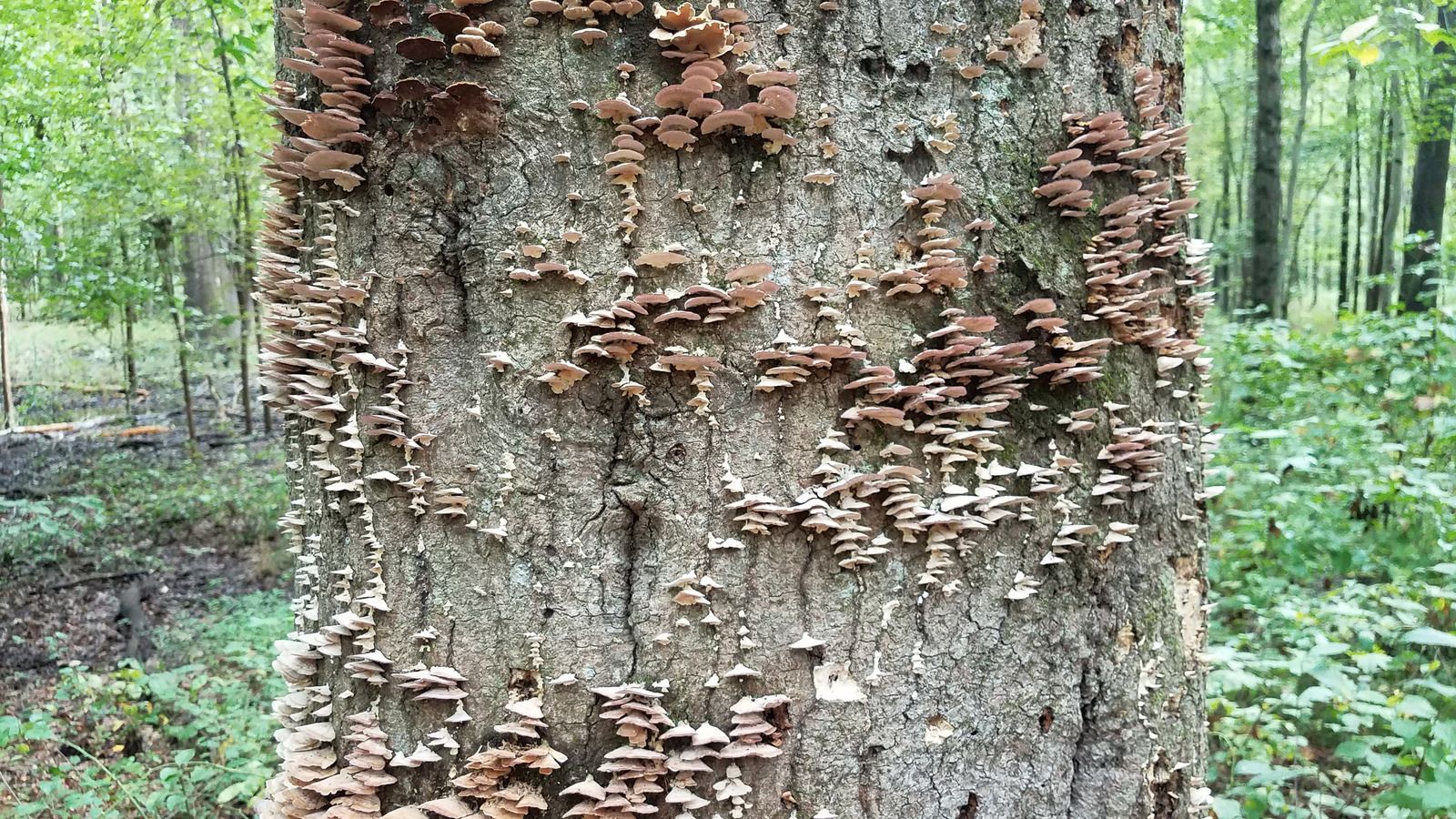
These woody brackets can persist for years, adding a new layer annually. Growth at the root flare typically points to butt rot, with decay concentrated in the trunk base and major structural roots. Trees may retain canopies while weakened wood increases failure risk during windstorms.
Bright Yellow-Orange, Shelf-Forming Clusters On The Trunk Or Exposed Roots
These bright yellow-orange clusters are usually Laetiporus, commonly called chicken of the woods. The fungus itself isn't the main concern; its presence can indicate internal decay that has already weakened the tree structurally, sometimes before obvious surface symptoms become visible to homeowners on the tree.
Mushrooms Scattered In The Lawn Or Mulch, Not Touching The Trunk Or Roots
Mushrooms scattered through lawn or mulch, without touching the trunk or roots, usually indicate saprophytic activity feeding on buried organic matter. This pattern is least concerning for
tree health, though repeated growth in one spot may signal decaying roots beneath the surface near that location.
Tip: If you're not sure whether a mushroom is touching the tree's roots or just growing nearby in the mulch, dig a little at the base with a trowel before assuming the worst. Fungal growth attached to an exposed root or growing from a crack in the bark is a meaningfully different situation than a mushroom a few feet out in the lawn.
Why This Type of Decay Is Hard to Judge From the Surface
Wood decay doesn't spread evenly, and it doesn't announce itself in proportion to how serious it's gotten. A tree can lose a significant amount of structural wood at the base or in the root plate and still leaf out fully every spring, because the parts of the tree responsible for moving water and sugar — the outer rings, just under the bark — are often the last to be affected. That's the uncomfortable part of butt rot and root rot in general: the canopy can look completely normal while the foundation underneath has been quietly failing for seasons.
According to Penn State Extension's research on tree diseases that create hazards, decay fungi work through a fairly predictable sequence — a wound allows entry, discoloration spreads through the wood, enzymes break down the structural fibers, internal strength drops, and only well into that process do fruiting bodies like mushrooms or conks finally appear on the outside. By the time you're looking at a visible growth, the fungus has typically already been active for a meaningful stretch of time, not days or weeks.
There's also no undoing this kind of damage once it's underway. University extension research on root rot in trees and shrubs is consistent on this point: there's no cure for a tree once decay fungi have colonized its root system or lower trunk. The only real options at that point are managing the tree's remaining stability, reducing load through pruning where appropriate, or removing it if the risk to people or property is too high — and figuring out which of those makes sense requires an actual look at how far the decay has spread, not a guess from the porch.
Warning:
Never assume a tree with fungal decay at the base is safe to leave standing over a driveway, a walkway, or anywhere people or vehicles regularly sit, simply because the canopy still looks green. Root and butt rot are two of the more common causes of a tree failing suddenly, without the kind of visible lean or dead-crown warning that other hazards usually give you time to notice.
Conditions Around Here That Make This More Common
The Poconos and the surrounding Lehigh Valley give decay fungi a lot to work with. Wet springs and humid summers keep the soil and lower trunk damp for extended stretches, which is exactly the environment these fungi need to establish in a fresh wound. Trees on wooded lots that have taken storm damage over the years often carry old wounds from broken limbs or bark torn loose by falling debris, and those unhealed injuries are common entry points.
Soil compaction adds another layer of risk. A trench dug for a utility line, a driveway poured too close to the root flare, or years of vehicle or foot traffic packing down the soil around a mature tree all restrict oxygen to the roots and stress the tree in ways that make it more attractive to opportunistic fungi like Armillaria. The same goes for trees already fighting emerald ash borer or another pest — a tree spending its energy resisting one threat has less left over to compartmentalize a fungal wound the way a healthy tree normally would.
Construction is a particularly common trigger locally. Grading, trenching, or excavation anywhere near a tree's root zone can sever roots outright or compact the soil enough to choke off oxygen, and either one creates the kind of chronic stress that decay fungi are built to exploit.
What an Assessment Actually Looks At
When Bryce and the crew get a call about mushrooms or fungus showing up at a tree's base, the visit starts with figuring out exactly where the growth is attached — the trunk, the root flare, an exposed root, or just the surrounding soil — because that alone rules a lot of possibilities in or out. From there, it's a walk around the entire base checking for soft or discolored bark, cracks, old wounds that never closed, and any softening of the wood that can be felt by hand near ground level.
The canopy gets checked too, since dieback concentrated on one side, thinning higher up, or branches that leaf out later than the rest of the tree can all reflect root damage that hasn't shown up at the surface yet. Proximity to the house, a driveway, power lines, or anywhere people spend time factors directly into how urgent the situation is, because a tree with the exact same amount of internal decay can be a low-priority watch item in the back of a wooded lot and a genuine hazard six feet from a bedroom window.
Not every tree with fungus at the base needs to come down. Some have enough sound wood left in the trunk and enough structural root remaining that monitoring, reduced pruning load, or cabling at a weak point can extend safe life for years. Others, particularly ones with extensive butt rot near a target like a house or a driveway, are past the point where anything but removal makes sense. The only way to know which situation you're actually looking at is to have someone assess how much decay is present and how much sound wood is left holding the tree up.
Frequently Asked Questions
Does every mushroom near a tree mean the tree is dying?
No. Mushrooms in mulch or lawn a few feet from the trunk are often saprophytic, feeding on dead material. Growth attached to the trunk, root flare, or an exposed root signals active decay worth investigating.
How can I tell if fungus is coming from a dead root versus a living one?
This is hard to judge by appearance alone, since both types look similar above ground. The reliable approach is checking whether the fungus attaches to living wood and whether nearby bark shows softening or discoloration.
Can a tree recover once fungus is found at its base?
No treatment reverses decay already established in a root system or trunk. What helps is managing the tree going forward, reducing stress, fixing drainage or compaction, and monitoring progression, which sometimes keeps trees safely standing.
Is it dangerous to remove mushrooms growing at the base myself?
Pulling or cutting the visible mushroom does not affect the fungal network already inside the wood, so removing them for appearance is fine. The mistake is assuming that removing the mushroom removes the underlying problem.
Why do I see this more after a wet season?
Decay fungi need sustained moisture to establish in a wound and to produce visible fruiting bodies. Wet weather combined with an existing wound from storm damage, pruning, or root injury creates near-ideal conditions for growth.
Should I be more concerned if the fungus is on the side of the tree that also leans?
Yes. Decay concentrated on one side of a root system, paired with a lean that is new or increasing, suggests the fungus may be compromising the structural roots anchoring that side. Get it evaluated soon.
What the Base of Your Tree Reveals
Fungus at the base of a tree works quietly, showing itself only after the decay underground has had time to spread through roots and lower trunk. The homeowners who come out of this well are the ones who treat that first cluster of mushrooms as information rather than decoration. Noticing where the growth attaches, whether it sits against living wood or several feet out in the lawn, is what separates a manageable situation from one that turns dangerous over time.
Backwoods Tree Service
has spent 10
years reading these signs across Stroudsburg, PA, where wet springs and storm-worn lots give decay fungi plenty of openings to exploit. Sound wood, canopy behavior, and how close a tree stands to a house or driveway all shape whether the honest answer is monitoring, pruning, or removal. A green canopy on its own settles nothing, because the wood actually holding a tree upright can weaken for seasons before the leaves upstairs ever betray it.